Winter's Electric 💖 Heart
Pulse, Qi, and the Subtle Current of Love

Valentine’s Day tends to frame the heart emotionally beit romance, connection, or longing. But beneath the symbolism, the heart is something even more remarkable: an electrical engine. Every heartbeat is a pulse of bioelectric current, a rhythmic wave that organizes blood flow, nervous system timing, and emotional state.
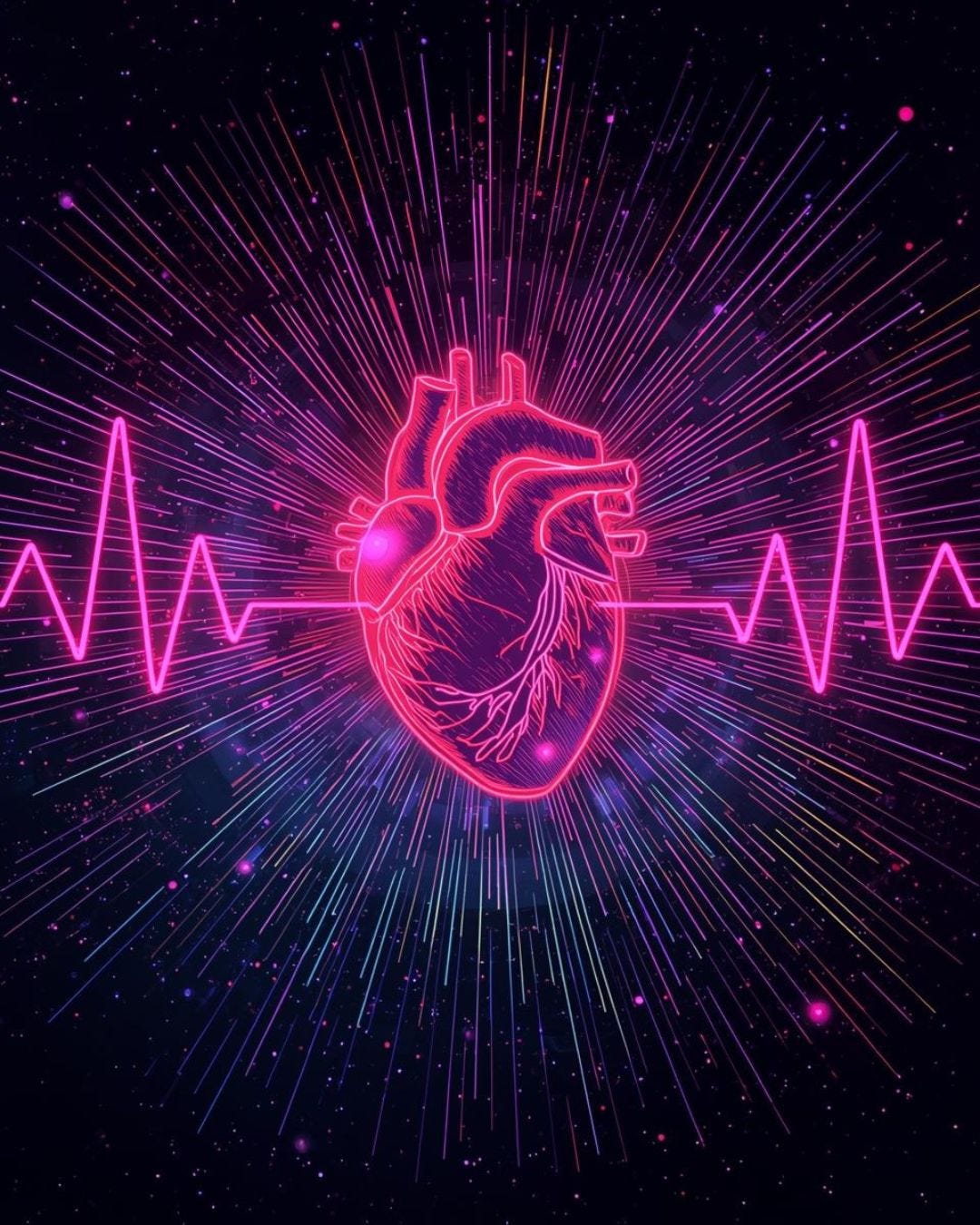
From an East Asian medicine perspective, this electrical rhythm mirrors Heart Qi as the animating force that governs circulation, consciousness, joy, and connection. When Heart Qi flows smoothly, the pulse is steady, the mind is clear, and the spirit feels settled. When it weakens or becomes dysregulated, both the electrical signal and the emotional experience begin to fragment.
❤🔥The Heart as an Electrical Generator
Modern physiology confirms what classical medicine described metaphorically:
The heart produces the strongest electromagnetic field in the body
Each contraction is initiated by an electrical impulse
Heart rhythm directly influences brain waves, hormonal signaling, and vagal tone
In simple terms: the heart doesn’t just pump — it broadcasts.
Traditional medicine uses different language but describes the same phenomenon. Heart Qi is said to “govern the pulse” and “house the Shen” (spirit). The pulse is not only mechanical; it carries information that is emotional, neurological & energetic.
When Heart Qi is strong, the electrical signal is coherent. When it is weak or disturbed, the signal becomes noisy.
Winter, Conservation, and the Vulnerable Heart
Winter is the season of storage and inward movement. Energy descends. Metabolism slows. The Kidney system is emphasized, while the Heart naturally enters a quieter phase.
Problems arise when we ask the heart to behave like it’s summer:
Overstimulation
Excess social output
Chronic emotional processing
Poor sleep and artificial light exposure
This creates a mismatch: high electrical demand with low energetic supply.
By February, many people begin to feel it — not as dramatic illness, but as subtle depletion.
Signs of Heart Qi Deficiency
Heart Qi deficiency often presents quietly. Common signs include:
Fatigue that worsens with emotional or social interaction
Shortness of breath on exertion
A weak, irregular, or easily disturbed pulse
Palpitations (especially at rest or at night)
Poor sleep or frequent waking
Low emotional resilience
Anxiety with a hollow or tired quality
Reduced joy or enthusiasm
Electrically speaking, this is a low-voltage system, meaning the wiring is intact, but the current is insufficient.
💘Valentine’s Day Reframed: From Stimulation to Coherence
Love is often described by its intensity.
But the heart doesn’t thrive on intensity, it thrives on coherence.
Coherence is when electrical rhythms, breath, emotion, and attention align. It feels like calm warmth rather than excitement. This is the state that restores Heart Qi.
Winter is not the time to force the heart open. It is the time to gently warm it, stabilize it, and reconnect it to the ground.
Regulating Heart Energy: Practical Approaches
1. Ground the Electrical Circuit
Every electrical system needs grounding. Without it, signals become erratic.
Simple grounding practices:
Slow walking outdoors (especially on cold, dry ground)
Standing meditation with attention in the soles of the feet
Reducing screen exposure at night
In Chinese medicine terms, this anchors Heart fire into Kidney water — preventing agitation and leakage.
2. Regulate the Pulse with Breath
Breath is the bridge between electricity and Qi.
A simple coherence breath:
Inhale for 4–5 seconds
Exhale for 6–7 seconds
Breathe into the chest and upper abdomen
Longer exhalation increases vagal tone and smooths the heart’s electrical rhythm.
3. Warm Without Overstimulating
Heart Qi responds to warmth, not stimulation.
Supportive habits:
Warm foods and drinks
Gentle movement rather than intense cardio
Early nights
Avoid excessive caffeine, late workouts, and emotional over-processing. All of which scatter the heart’s electrical signal.
4. Gentle Opening, Not Forcing
In winter, opening the heart should feel like thawing ice: slow and natural.
Practices that help:
Gratitude without performance
One-on-one connection rather than social overload
Light chest opening stretches paired with relaxed breathing
If the heart is forced open when Qi is weak, symptoms worsen. If it is supported, it opens on its own.
The Quiet Power of the Winter Heart
The strongest electrical systems are not the loudest — they are the most stable.
As Valentine’s Day arrives, consider shifting the desire from:
“How do I get more love?”
to:
“How do I get my heart to conduct its energy smoothly?”
A regulated pulse, a grounded body, and a gently warmed heart create the conditions where connection arises naturally, not as a spike, but as a steady current.
This is the winter heart. Quiet, enduring & electric 🩵